
SaskWatch Newsletter

Consumer Association of Saskatchewan Inc.
SaskWatch Newsletter Fall 2026
Fall Into Safety: E-Scooters and Lithium Batteries
by Billie Sarcauga

safely. With the increasing use of e-scooters among minors, e-scooter-related accidents and injuries are also
on the rise. A Canadian Paediatric Surveillance Program (CPSP) survey of Canadian pediatric specialists,
conducted from late 2025 to early 2026, documented 10 deaths, 12 ICU admissions and 26 hospitalizations
lasting more than two days in the previous 12 months as a result of e-scooter crashes. Head injuries occurred
in about half of the cases, and most injured riders were not wearing helmets. (1) Following the rules can save
lives, help avoid tickets and fines while keeping roads and pathways safer for everyone. Check your local city
or municipal bylaws before riding to know where e-scooters are permitted and for additional safety
standards.
Where e-scooters are permitted in Saskatchewan:
- Riders must be at least 16 years old and wear an approved helmet
- Riders must follow provincial rules and local bylaws that apply to a vehicle under The Traffic Safety Act (2)
- E-scooters are generally limited to roads with posted speed limits of 50 km/h or less, unless local bylaws
set additional restrictions. - No passengers are permitted. (3)
Lithium-ion Battery Safety
As the use of lithium-ion batteries continues to grow, fire departments are seeing a rise in related fires.
Several recent incidents in Alberta and Ontario have highlighted the concern, including three battery fires in
Calgary within a single 24-hour period. Calgary has already exceeded last year’s total number of lithium-ion
battery fires, with overheated e-scooter batteries responsible for two of the latest cases. Because e-scooters
use larger, more powerful lithium-ion battery systems, battery incidents can result in serious fires that are
difficult to extinguish. Always follow the manufacturer’s instructions.
For safe battery use:
- Use the original battery and charger or an approved replacement from the manufacturer or retailer.
- Allow batteries to reach room temperature before use and never charge them below 0°C.
- Never modify, tamper with or build your own lithium-ion battery.
- Do not charge your battery for longer than recommended. Overcharging can cause the battery to overheat, which can lead to fires or explosions. (4)
Sources:
- MacFarlane, J. (2026, August 13).’Exponential rise’: Canadian pediatricians document severe e-scooter injuries, deaths in children, teens. CBC News. https://www.cbc.ca/news/health/e-scooters-pediatrician-survey-9.7305210
- Government of Saskatchewan. (2024). The Traffic Safety Act (Chapter T-18.1). https://publications.saskatchewan.ca/
- Saskatchewan Government Insurance. (n.d.). E-scooters. https://sgi.sk.ca/e-scooters
- Ghobrial, A. (2026, August 14). Blamed for several recent fires, these popular batteries may face regulations in Canada. CTV News. https://www.ctvnews.ca/canada/article/blamed-for-several-recent-fires-these-popular-batteries-may-face-regulations-in-canada/
- Health Canada. (2025, December 24). Battery safety: Lithium-ion batteries. Government of Canada. https://www.canada.ca/en/health-canada/services/household-products/battery-safety/lithium-ion.html
Spotlight on Seniors – October 6, 2026
Location: Grand Salon, TCU Place – 35 22nd Street East, Saskatoon.
Admission: $15 pay at the door (Cash Only)

Spotlight on Seniors is an annual event presented by the Saskatoon Council on Aging and TCU Place during Saskatchewan’s Seniors Week.
As the province’s largest event dedicated to older adults, it brings together information, resources, and entertainment in one vibrant setting.
Designed to educate, inspire, and engage adults aged 55+, the event features a diverse range of topics, including hobbies, financial planning, careers, travel, lifelong learning, retirement, health, and wellness. The showcase highlights products, services, and opportunities that support and enrich the lives of older adults.
Visitors can explore more than 80 exhibitor booths, enjoy live demonstrations, sample products, connect with service providers, and take part in a variety of activities and entertainment.
Join us at TCU Place in Saskatoon and discover the latest programs, products, and services for older adults while connecting with your community.
Source: https://www.scoa.ca/classes-and-events/spotlight-on-seniors
A Quick Summary: Canada’s Proposed Safe Social Media Act
On June 10, 2026, the Government of Canada introduced Bill C-34, the Safe Social Media Act, which aims to make social media platforms and AI chatbots safer for children by requiring services to take steps to prevent online harms rather than responding only after harm occurs.
Key measures include:
- Age restriction: Children under 16 would not be permitted to have social media accounts, although platforms could seek an exemption by demonstrating that they have adequate safeguards for children.
- Safety by design: Social media and AI chatbot services would have to identify, assess and reduce risks to children, including exposure to harmful content and high-risk interactions.
- Protection from and removal of harmful content: Social media services would have responsibilities related to content involving child sexual exploitation, non-consensual intimate images, cyberbullying, content encouraging self-harm, hate, violence, and terrorism or violent extremism.
- AI chatbot safeguards: AI chatbots would have to reduce the risk of generating harmful content or engaging in harmful behaviour and be transparent about how they respond to crisis situations, such as when a user may intend to harm themselves or someone else.
- Greater transparency: Regulated services would have to provide accessible user guidelines, tools for reporting and blocking, safety plans and labels for certain synthetically generated content.
- New regulator: The legislation proposes creating an independent Digital Safety Commission of Canada to enforce requirements, conduct audits, investigate complaints and issue penalties for non-compliance. (1)
Sources:
1.Canadian Heritage. (2026, June 10). Government of Canada introduces legislation to make social media services and AI chatbots safer for children. Government of Canada. https://www.canada.ca/en/canadian-heritage/news/2026/06/government-of-canada-introduces-legislation-to-make-social-media-services-and-ai-chatbots-safer-for-children.html
Before You Toss It: Rethinking Best Before Dates
Understanding Best Before Dates
Understanding the different dates on food labels can help consumers decide what to buy, when to eat it, and how to manage grocery costs. Food labels are often misunderstood, which can lead to unnecessary food waste and higher grocery bills. Learning what these dates mean can help consumers make better decisions about food quality and freshness.
One commonly misunderstood label is the “best before” date. Many people mistake it for an expiry date and may throw food away once the date has passed because they are concerned about its safety. However, a best before date is mainly about food quality, not food safety.
Best before dates are required on certain foods with a shelf life of 90 days or less. They can be found on many foods throughout the grocery store. A best before date tells consumers how long a food is expected to maintain its freshness, taste, nutritional value, and other qualities when it is stored properly and remains unopened. (1)
Food may still be safe to eat after its best before date if it has been stored properly. However, its quality may change over time. The best before date does not guarantee that food will be safe or unsafe after that date. Instead, it provides information about the expected freshness and quality of the product. Consumers should also consider how the food has been stored and whether there are signs that it has spoiled.
The words “best before” or “meilleur avant” may appear anywhere on the package. The date is generally written in the order of year, month, and day. The year may be left out when the date is within the same calendar year. (2)
Why Are Best Before Dates Used?
The Canadian Food Inspection Agency (CFIA) explains that best before dates have been part of Canadian food labelling practices for more than 20 years.
They are used by the food industry to help manage stock, rotate products, and communicate the expected quality and freshness of food. (3)
Best before dates can:
- Help consumers understand a food’s freshness.
- Help consumers make informed purchasing decisions.
- Help retailers rotate their stock.
- Help food companies manage their products.
- Support product traceability and recalls.
Best before dates: quality, not safety
There’s a common misconception that food should not be eaten once its best before date has passed. In fact, best before dates are about food quality, not food safety. They indicate when an unopened product is expected to be at its peak for freshness, flavour, texture and nutritional value when stored properly.
An unopened product may still be perfectly good to eat days or even weeks after its best before date. However, its quality may decline over time. For example, it may lose flavour, change in texture or contain less of certain nutrients, such as vitamin C in juice. Best before dates apply to unopened products; once opened, the food’s shelf life may change.
When deciding whether to eat food past its best before date, use your judgement. Check the package for damage and the food for obvious signs of spoilage, such as mould, an unusual appearance or an off odour. If the food looks or smells spoiled, when in doubt, throw it out. However, remember that harmful microorganisms can grow without changing a food’s appearance, smell or taste. Some foods can become unsafe before obvious spoilage occurs, so proper storage, handling and following safe food storage guidelines remain essential. (4)
Using food after its best before date when it has been properly stored and remains suitable can help reduce unnecessary food waste. Foods such as canned goods and dried pasta may also carry best before dates, although these dates are not required for all foods. (5)
Why do consumers misunderstand consumer dates?
For many consumers, a best before date has become a simple signal: if the date has passed, the food is unsafe and should be thrown away. The distinction may seem small between the various Canadian food date labels, but it can have significant consequences if misunderstood. When consumers interpret a best before date as a safety deadline, perfectly edible food can be discarded simply because the date on the package has passed. Research from Dalhousie University suggests that many Canadians rely heavily on date labels when deciding whether food is safe to eat, contributing to unnecessary household food waste. (6)
The scale of the problem is substantial. Second Harvest has reported that billions of dollars’ worth of food is lost or wasted in Canada, with confusion and inconsistent practices around best before dates contributing to premature disposal (7).
At the household level, the National Zero Waste Council has estimated that 63% of food discarded by Canadian households is avoidable, meaning it was edible at some point before being thrown away. For the average household, this avoidable food waste amounts to approximately 4.5 meals per week, equivalent to about $1,300 worth of food each year. Across Canada, this adds up to approximately 2.3 million tonnes of avoidable household food waste annually.
Sophie Langlois-Blouin, Vice-President of RECYC Québec, emphasizes that food loss and waste occur throughout the entire food chain, from production to the consumer. While distribution, processing and retail all play a role, she notes that food waste is a broader issue that requires collective action. Every sector has a role to play in reducing food loss and waste in Canada, from producers and retailers to consumers and households. (8)
Sources:
- Canadian Food Inspection Agency. (2023, April 25). Understanding the dates on our food. Government of Canada. https://inspection.canada.ca/en/inspect-and-protect/food-safety/understanding-dates-on-our-food [canada.ca]
- Canadian Food Inspection Agency. (2026, March 25). Best before, expiration and more: Understanding the date labels on your food. Government of Canada. https://inspection.canada.ca/en/food-labels/labelling/consumers/date-labels-food [canada.ca]
- Canadian Food Inspection Agency. (2024, March 14). What’s the tea on best-before dates: 6 ways they help you at home and while shopping. Government of Canada. https://inspection.canada.ca/en/inspect-and-protect/food-safety/best-dates
- Canadian Food Inspection Agency. (2023, November 15). Three facts about best before dates that can save you money. Government of Canada. https://inspection.canada.ca/en/inspect-and-protect/food-safety/three-facts-about-best-dates-can-save
- Natali, N., & Charlebois, S. (2026). The cost of confusion: How label knowledge and risk attitude shape household food waste. Resources, Conservation & Recycling Advances, 29, 200300. https://doi.org/10.1016/j.rcradv.2025.200300
- Bamford, A. (2026, May 17). Here’s why best before dates are costing Canadians billions in avoidable food waste. CTV News.
https://www.ctvnews.ca/canada/article/heres-why-best-before-dates-are-costing-canadians-billions-in-avoidable-food-waste/ - Canadian Food Inspection Agency. (2026, March 25). Best before, expiration and more: Understanding the date labels on your food. Government of Canada. https://inspection.canada.ca/en/food-labels/labelling/consumers/date-labels-food [canada.ca]
- Ibid.
This Fall, Put Radon On Your Home Safety Checklist
By Billie Sarcauga
Radon is a naturally occurring radioactive gas produced by the breakdown of uranium in soil, rock, and groundwater. It is completely invisible, odourless, and tasteless, making it impossible to detect without specialized testing. While radon quickly disperses outdoors and usually isn’t a concern, it can accumulate to dangerous levels inside homes and other buildings. (1) Approximately one in five Canadian homes has radon levels that exceed Health Canada’s recommended guideline. (2)
It can seep in through unfinished floors, cracks in basement floors or foundations, gaps around pipes, windows, sump pumps and other openings where the home comes into contact with the soil. Once inside, radon can become trapped, especially in basements and crawlspaces where ventilation and airflow are limited. (3)
Why Is Radon Dangerous?
When radon breaks down, it releases tiny radioactive particles that can be inhaled into the lungs.
These particles become trapped in lung tissue and release energy that damages cells. Over time, this damage can lead to cancer. The risk increases as exposure levels rise and as the duration of exposure becomes longer. Long-term exposure is the second- leading cause of lung cancer in Canada and the leading cause of lung cancer among non-smokers. Health Canada estimates that radon contributes to approximately 16% of all lung cancer cases in Canada, resulting in more than 3,000 deaths each year. (4)
Testing for radon
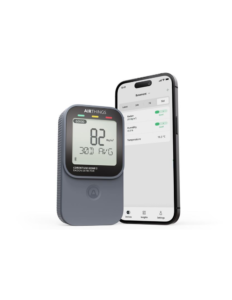
The only way to know if a home has elevated radon levels is to test for it. A home’s age, condition, or location cannot reliably predict radon levels, and neighbouring homes can have very different readings. Health Canada’s guideline for indoor radon is 200 Bq/m³. If levels meet or exceed this threshold, mitigation is recommended, with higher readings requiring more urgent action. (5)
Experts recommend a long-term test of at least three months, ideally during fall or winter when homes are more sealed and have less natural ventilation, which can provide a better indication of typical radon exposure. After testing, the kit is sent to a laboratory for analysis. Verified radon test kits are available through the Canadian Lung Association website: https://tla-radon.com/ (6)
Lowering radon levels and its cost
Lowering radon levels in a home requires specialized knowledge and skills to ensure that mitigation measures are properly selected, installed, and working effectively. If your radon level is above the recommended guideline, hire an experienced and reputable contractor who is qualified to perform radon mitigation.
The Canadian National Radon Proficiency Program (C-NRPP) can help you find a certified radon professional. Contact C-NRPP at 1-855-722-6777 or visit the Take Action on Radon website for a list of certified service providers who can assess your home and recommend appropriate measures to reduce radon levels.
The cost of radon mitigation varies depending on the size and design of your home, the radon reduction system required, and the work involved. Mitigation costs typically range from $2,000 to $4,000. (7)
Financial assistance may be available through the Lungs Matter: Home Radon Mitigation Grant Program, which provides eligible applicants with up to $1,500 toward the cost of radon mitigation. (8)
Sources:
- Canadian Lung Association. (n.d.). Radon: What you need to know. Canadian Lung Association. https://www.lung.ca/how-to-protect-your-lungs/air-quality/radon/
- Canadian Lung Association. (n.d.). Radon: What you need to know. https://www.lung.ca/how-to-protect-your-lungs/air-quality/radon/ [ca]
- Ibid.
- Health Canada. (2026, June 5). Radon gas: It’s in your home. Government of Canada. https://www.canada.ca/en/health-canada/services/environmental-workplace-health/reports-publications/radiation/radon-your-home-health-canada-2009.html
- Canadian Lung Association. (n.d.). Radon: What you need to know. https://www.lung.ca/how-to-protect-your-lungs/air-quality/radon/
- Ibid.
- Canadian Lung Association. (n.d.). Radon: What you need to know. [ca]
- Canadian Lung Association. (n.d.). Lungs matter: Radon mitigation support. https://www.lung.ca/how-to-protect-your-lungs/air-quality/radon/lungs-matter-radon/
SaskWatch Fall 2026
Published by:
Consumer Association of Saskatchewan
Contributors:
- Billie Sarcauga
CASK Board of Directors
President: Lou Hammond Ketilson
Vice-President: Patricia Lewis
Secretary: Courtney Pickard
Treasurer: Patricia Lewis
Check us out on Facebook:
facebook.com/ConsumerSask/
Instagram:
@consumerassociationsask
Phone
(306) 242-4909
For inquiries and complaints, please call us.
Feel free to email us with any questions or concerns
Mailing Address
Consumer Association of Saskatchewan Inc. (CASK)
P.O. Box 7344
Saskatoon, SK
S7K 4J3
Send us mail at the address above for assistance.
Make a Real Impact: Volunteer for Consumer Advocacy
Join Our Volunteer Team Today! Your time matters – even a few hours a month is greatly appreciated.
The Consumer Association of Saskatchewan exists because of the generous commitment of its volunteers.